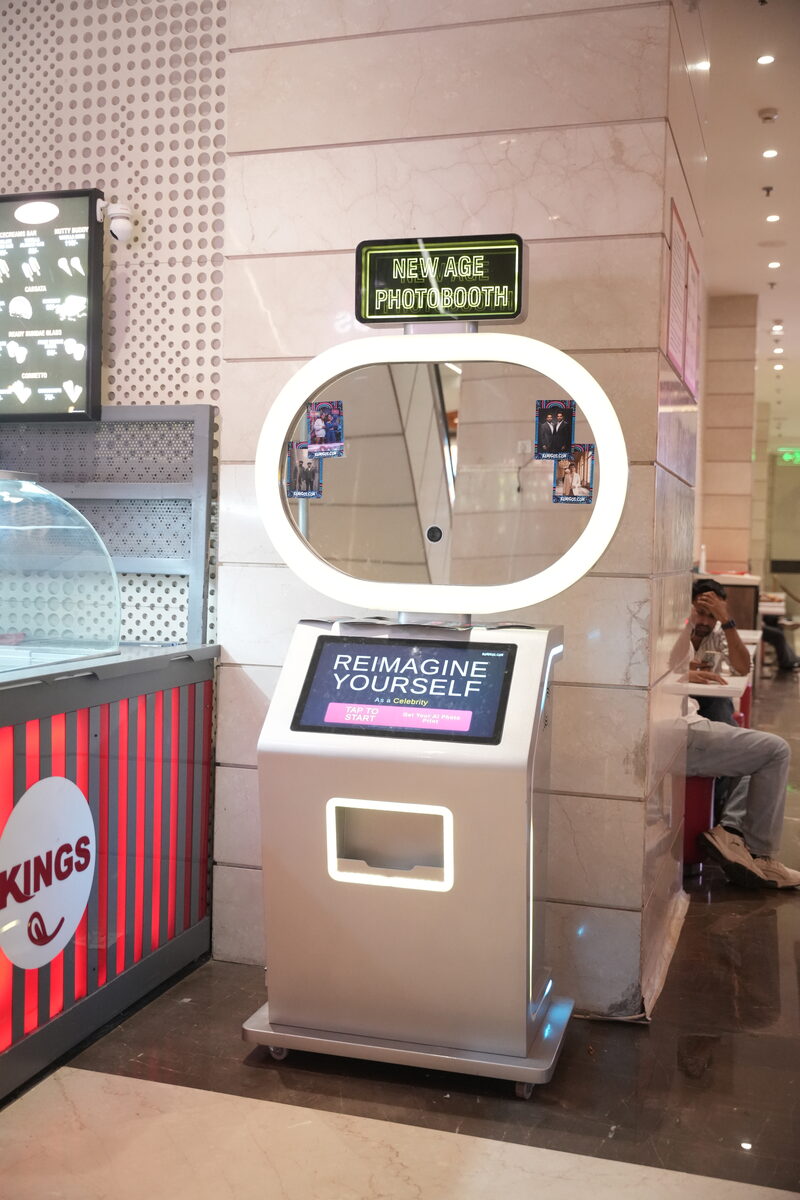
Quick summary: Every restaurant, cafe, and bar in India has dead space — the corridor to the washrooms, the wall near the entrance, the awkward corner behind the billing counter. That space earns ₹0/month. An AI photo booth turns it into ₹50,000–₹2,00,000/month in session revenue, while generating free Instagram marketing every time a customer shares their AI-transformed photo and tags your venue. The booth runs unattended (UPI payments, no staff), fits in 6.3 sq ft, and — for venues that care about design — can be custom-built to match your interior aesthetic. This post covers the business case, the revenue math, and how to get one.
Can a restaurant or bar make money from a photo booth?
Yes. An AI photo booth in a busy restaurant or bar generates ₹50,000–₹2,00,000/month in session revenue from a 6.3 sq ft footprint. Customers pay ₹129–250 per AI photo session via UPI — no staff needed. At a venue doing 30–80 sessions/day, the booth pays for itself in 3–8 months. Beyond direct revenue, every session generates 5–10 social media posts (Instagram stories, WhatsApp statuses) tagging the venue — free organic marketing that drives new footfall. The booth runs fully unattended with real-time alerts to the owner's phone. For venues that want the booth to match their interior design (industrial brewery, minimalist cafe, luxury lounge), Bamigos manufactures custom cabinets from their Delhi factory.
Restaurants and bars worldwide already do this — India is catching up
Photo booths in F&B venues aren't an experiment. They're an established revenue stream in markets where the hospitality industry is 5–10 years ahead of India:
- United States: Photo booths are standard at breweries, cocktail bars, and fast-casual chains across New York, LA, and Austin. Chains like Dave & Buster's integrate photo experiences into their entertainment mix. The US photo booth rental market alone exceeds $400M/year — and a growing share of that is permanent installations in F&B venues, not just event rentals.
- Dubai & UAE: Luxury restaurants and rooftop lounges in Dubai Marina and Downtown use branded photo booths as part of their Instagram marketing strategy. In a market where venue design is everything, custom booths that match the interior are standard, not premium.
- Japan & South Korea: The K-pop 4-cut photo booth (purikura) phenomenon started in Japan in the 1990s. Today, photo booths are in malls, restaurants, cafes, and even convenience stores across Tokyo, Seoul, and Osaka. The format has evolved into AI-powered versions — exactly what Pikcha delivers.
- Singapore: Photo booths are common in bars and restaurants in Clarke Quay and Marina Bay Sands. The tropical cocktail bars use them as an Instagram draw — customers post, tag the venue, and drive footfall from social media discovery.
- Australia: Companies like Social Booth build custom permanent photo booths designed as architectural features inside bars and nightclubs. Zero upfront cost to the venue — revenue-share model. The booth matches the venue's interior design, not the other way around.
India's F&B market is growing at 9–11% annually (NRAI India Food Services Report). Metros like Delhi, Mumbai, Bangalore, and Hyderabad now have the same density of premium restaurants, microbreweries, and experiential dining concepts as Singapore or Dubai did 5 years ago. The customer behaviour is already here — Instagram-first dining, experience-over-food spending, social-share culture. What's missing is the infrastructure: venues haven't adopted photo booths yet because nobody has offered them a booth designed for a restaurant, with Indian payment systems (UPI), and manufactured locally. That's the gap Bamigos fills.
The Instagram problem every restaurant owner already has
Your customers are already taking photos in your restaurant. Every table, every cocktail, every plated dish gets photographed and posted. But you get almost nothing from it. The photos go up without tagging your venue. They show the food, not the brand. And the aesthetic is uncontrolled — bad lighting, cluttered backgrounds, half-eaten plates.
An AI photo booth solves this differently than most restaurant owners expect. It doesn't just take photos — it transforms them. A customer walks in, pays ₹150 via UPI, and gets an AI-generated portrait in a style they'd never get from their phone camera: Bollywood poster, royal Mughal portrait, K-pop 4-cut strip, superhero composite, vintage film grain. The output is so striking that customers want to share it. And when they do, your venue name is on the frame.
This creates a flywheel that no amount of paid social media can replicate:
- Customer takes AI photo → pays ₹129–250 (direct revenue)
- Shares on Instagram/WhatsApp → tags your venue or uses your geotag (free reach)
- Their followers see it → "where is this?" → new footfall to your venue
- New visitors see the booth → repeat the cycle
A restaurant spending ₹30,000–₹1,00,000/month on Instagram ads and influencer reels gets the same reach — maybe less — than a photo booth generates for free after the upfront purchase. The difference: the booth also earns ₹50K–2L/month in session revenue while doing it.
Revenue math for four types of F&B venues
Photo booth revenue depends on venue footfall, audience intent (entertainment-seeking vs utilitarian), and session pricing. Here's what the math looks like across four common venue types in Indian metros.
| Venue type | Daily footfall | Expected sessions/day | Session price | Monthly revenue | Monthly net (after rent share) |
|---|---|---|---|---|---|
| Fast-casual cafe (weekday-heavy, 10am-10pm) | 200–400 | 20–40 | ₹129–150 | ₹77,000–₹1,80,000 | ₹50,000–₹1,20,000 |
| Microbrewery / gastropub (weekend-heavy, 12pm-1am) | 300–600 | 40–80 | ₹150–200 | ₹1,80,000–₹4,80,000 | ₹1,20,000–₹3,20,000 |
| Rooftop bar / lounge (evening-only, 6pm-1am) | 150–350 | 25–50 | ₹200–250 | ₹1,50,000–₹3,75,000 | ₹1,00,000–₹2,50,000 |
| Fine-dining restaurant (dinner, 7pm-11pm) | 80–150 | 10–25 | ₹200–250 | ₹60,000–₹1,88,000 | ₹40,000–₹1,25,000 |
Why breweries and bars outperform cafes: Alcohol + social setting = higher willingness to pay for a fun experience. A group of 4 at a brewery spending ₹5,000 on drinks will happily add ₹200 for a group AI photo they can share immediately. The booth becomes part of the night out, not an interruption.
Why fine-dining is the lowest tier: Smaller footfall, guests don't want to leave their table, and the ambiance typically doesn't accommodate a kiosk in the dining room. However, fine-dining restaurants with a bar area, lounge, or waiting section can place the booth there — away from the main dining space but accessible during pre-dinner drinks.
These projections assume the venue owner either buys the booth outright (keeping 100% of revenue minus a venue rent/revenue-share if the booth is placed in leased space) or partners with a Pikcha operator who places the booth and splits revenue 75/25 with the venue.
Where to put it: the dead-space audit
Every restaurant, cafe, and bar has at least one of these:
- The entrance/waiting area — customers wait 10–30 minutes for a table on weekends. A photo booth turns wait time from a frustration into an activity. Conversion rate is highest here because boredom drives usage.
- The corridor to the washrooms — high foot traffic, zero revenue. Guests walk past 2–4 times per visit. A booth here gets natural discovery without taking floor space from tables.
- The dead corner — every venue has a table or two that guests avoid (near the kitchen, behind a pillar, next to the AC unit). Remove the unloved table, place a booth. You trade a ₹2,000–5,000/night table revenue for ₹5,000–15,000/night booth revenue.
- The bar counter end — breweries and pubs often have an unused stretch at the end of the bar. Guests standing with drinks will use a booth on impulse.
- Outdoor/terrace area — rooftop bars can place the booth near the view side, so AI photos include the skyline context. Instagram gold.
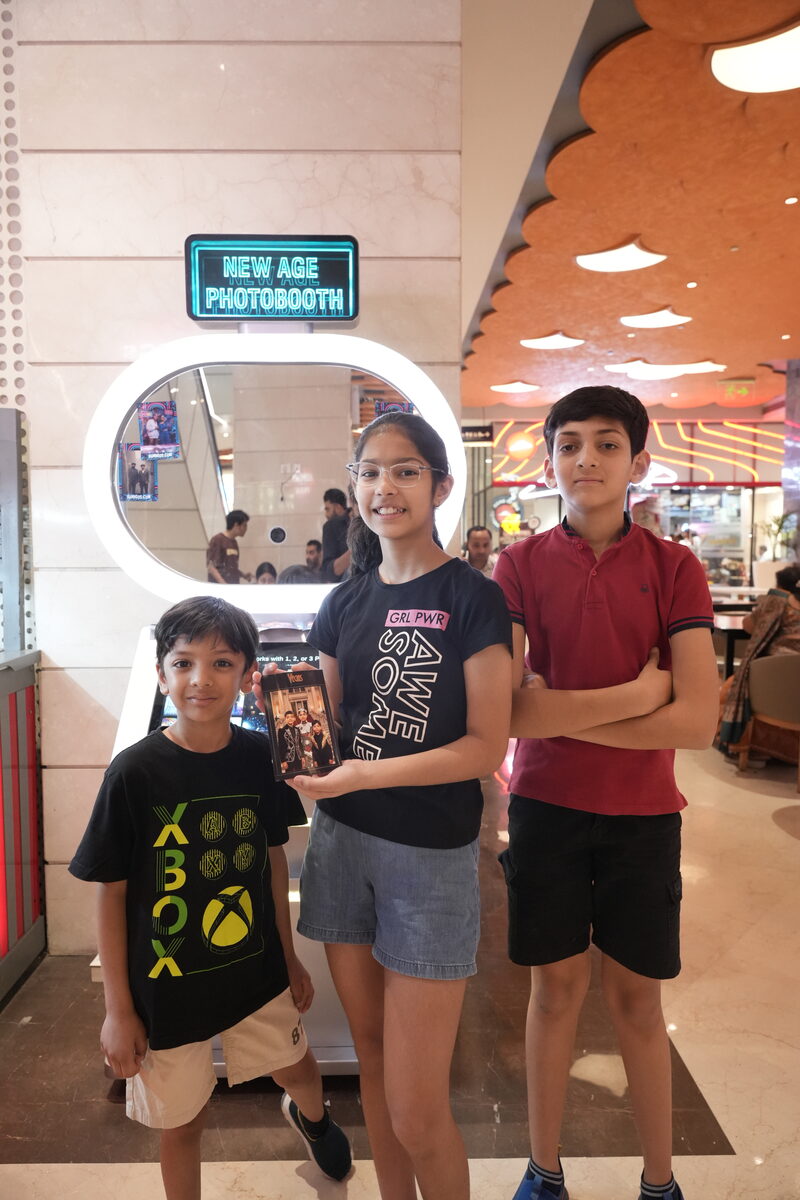
The Pikcha booth footprint is 6.3 sq ft (6.71 ft tall × 3.29 ft wide × 1.92 ft deep). That's smaller than a two-top table. It needs a standard power outlet and a Wi-Fi connection — no special infrastructure.
Why a generic white booth doesn't work in premium venues
Here's the problem most photo booth vendors create for restaurant and bar owners: they sell a mass-produced white or black kiosk that looks like it belongs in a mall food court, not in your carefully designed interior. You spent lakhs on your restaurant's aesthetic — the lighting, the furniture, the wall textures, the signage. A generic machine sitting in the corner undermines all of it.
Bamigos builds custom photo booth cabinets at our Delhi factory. The same team that designs the electronics, firmware, and AI software also designs the cabinet — hardware and software under one roof. That means we can build a booth that matches your venue's design language:
- Industrial brewery: exposed steel frame, matte black panels, Edison-bulb accent lighting, raw wood trim
- Minimalist cafe: clean white body, rounded edges, Scandinavian-style birch accents, recessed screen
- Luxury lounge: brushed brass accents, dark marble-effect panels, ambient LED strip, compact footprint
- Street-food / retro bar: bold colour blocks, neon accent strip, vintage poster wrap, sticker-wall texture
The software matches too. Your venue's logo goes on every photo frame. AI effects can be themed to your brand — a brewery gets beer-label portrait frames, a rooftop bar gets skyline overlays, a Japanese restaurant gets anime-style transformations. The booth becomes part of your brand, not a foreign object in your space.
Want a custom booth designed for your venue?
Book a 30-minute design call. We'll look at your venue photos and sketch a concept on the call — no obligation.
Book a Design CallWhatsApp UsWhat customers see: AI-transformed photos your guests will share
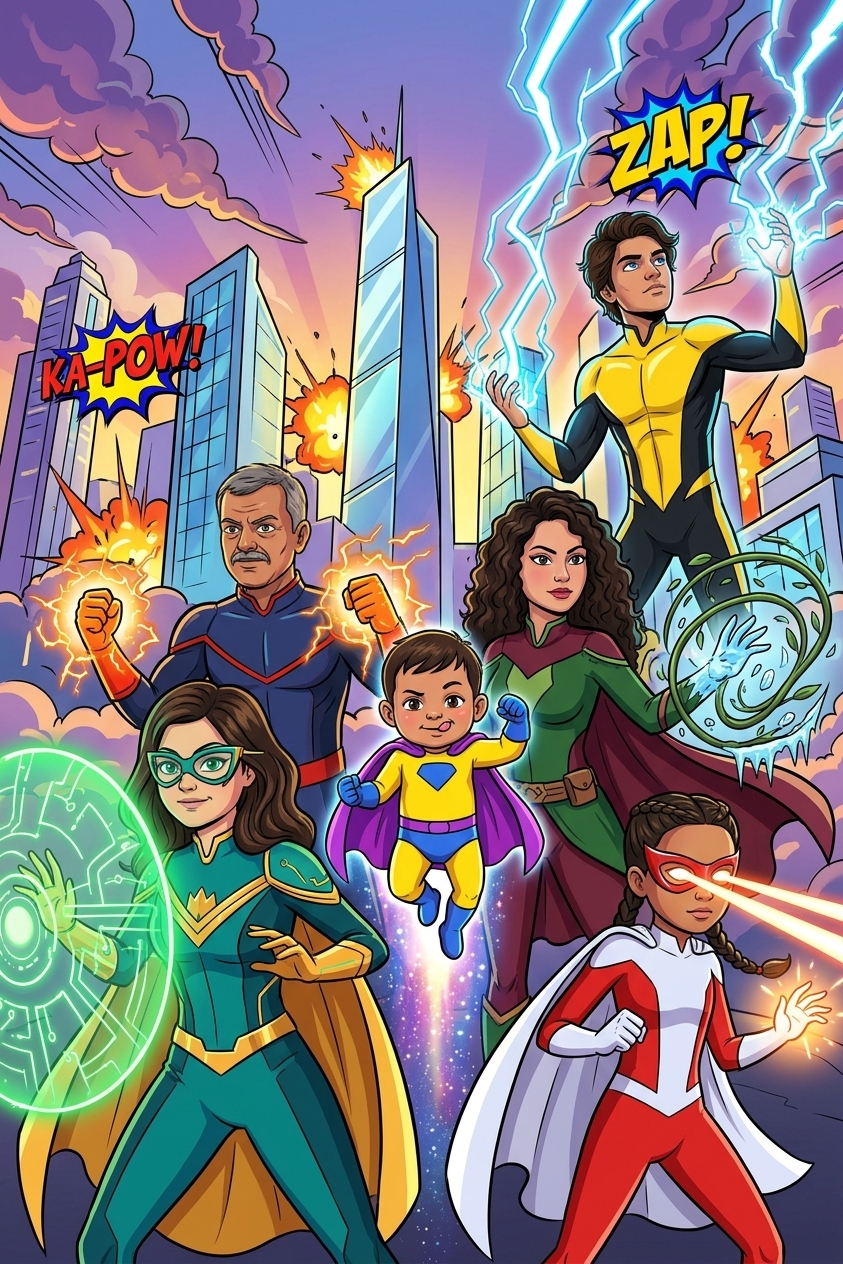
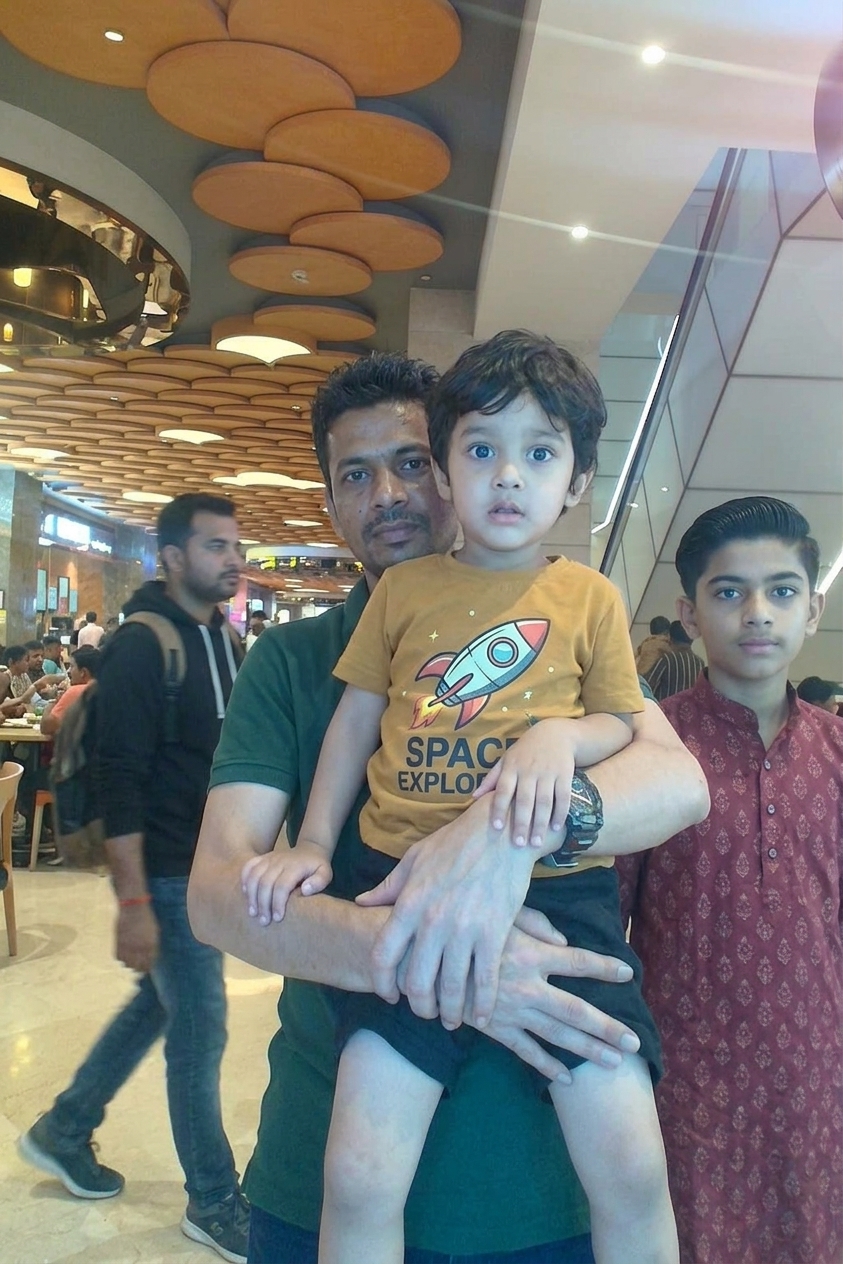
The reason customers pay ₹150–250 for a photo session — and the reason they share it — is the AI transformation. The booth doesn't take an ordinary photo. It reimagines the customer in a completely new style. These are real before/after pairs from actual Pikcha sessions:
Before

After — AI transformed
Before

After — AI transformed

Starting a Photo Booth Business?
Get AI photo booth pricing and ROI details from our team. No obligation.
Before
After — AI transformed

For F&B venues specifically, the AI effects that work best are:
- K-pop 4-cut strip — the most shared format among 18–30 age group. Four frames, instant classic.
- Bollywood/Tollywood poster — customer becomes the star. Groups love this.
- Vintage film grain — works perfectly in retro cafes and speakeasy-style bars.
- Royal Mughal portrait — popular for date nights and couple visits.
- Celebrity pose composite — customer poses with a celebrity cutout, AI blends them into one scene.
- Custom venue-branded frames — your logo, your tagline, your venue's design language on every print.
New effects are pushed to the booth remotely every quarter — no hardware update needed. Bamigos's AI team develops them in-house; the booth gets smarter in the field.
How it runs: zero staff, full self-service
The strongest objection restaurant owners have: "I don't have staff to manage another thing." You don't need any. The Pikcha booth is fully self-service — the same operating model as a vending machine, but earning 8–10× more per transaction.
The customer flow:
- Customer walks up, selects an AI effect on the touchscreen
- Pays via UPI QR (₹129–250 depending on your pricing)
- Poses for the camera
- AI processes the photo in 15–20 seconds
- Instant dye-sublimation print (Japanese DNP printer — photo-grade quality)
- Digital copy sent via WhatsApp — customer shares immediately
The operator (you, or a Pikcha operator you partner with) gets:
- Real-time phone alerts — out of paper, no internet, switched off during operating hours, payment failures
- Fleet dashboard — per-booth revenue, session volume, AI effect popularity, payment health. All from a browser.
- Remote AI effect management — push new effects or disable underperforming ones without visiting the venue
- UPI auto-settlement — money lands in your bank account. No cash handling, no pilferage risk.
Weekly operator time on a single booth: under 1 hour. Monthly consumable cost: ₹3,000–5,000 (printer ribbon + paper). That's it.
Two ways to get a Pikcha in your venue
Option A: Buy a standard Pikcha (₹3.5L–6.5L)
Three tiers — Lite, Studio, Pro — starting at ₹3.5 lakh + 18% GST. Factory-direct from Delhi, 2-week delivery, 1-year warranty on Studio and Pro (6 months on Lite). The booth comes in standard colours; we customise the software — your logo on frames, your venue's AI effects, your pricing. Best for venues that want fast deployment and don't need a custom exterior.
→ See standard Pikcha pricing and tiers
Option B: Commission a custom booth (design call required)
For venues where design matters as much as function — breweries, luxury lounges, flagship restaurant locations — we build a custom cabinet from scratch. You send us your venue photos, interior design references, and brand guidelines. Our design team creates a concept. We build it at our Delhi factory (the same team that manufactures the standard Pikcha). Timeline: 4–8 weeks from design sign-off to installation.
Custom booths include everything the standard Pikcha has — the same AI engine, the same Japanese DNP printer, the same operator dashboard, the same warranty — in a cabinet that looks like it was designed for your space. Because it was.
Custom booth pricing depends on materials, size, and complexity. It starts above the standard Pikcha price range. The design call is free — no obligation.
Standard or custom — let's figure out what fits your venue
30-minute call. We'll look at your space, recommend placement, and if you want custom, sketch a concept on the call.
Book a CallWhatsApp UsFrequently asked questions
How much does a photo booth for a restaurant cost?A standard Pikcha AI photo booth starts at ₹3.5 lakh + 18% GST (₹4.13L landed). Three tiers available — Lite, Studio, Pro. Custom-designed booths that match your venue's interior start above this range; pricing depends on materials and design complexity. See standard pricing or book a call for custom quotes.
Will a photo booth disturb my restaurant's ambiance?The booth operates silently — no music, no loud sounds. The only audio is a soft shutter click and a brief processing chime. For fine-dining, we recommend placing the booth in the bar area, lounge, or entrance — not the main dining room. For cafes, breweries, and bars, the booth fits naturally in the social zone.
What if customers are drunk and damage the booth?The Pikcha cabinet is built with commercial-grade materials designed for high-traffic venues — malls, gaming zones, events. The touchscreen is tempered glass. The printer is enclosed and protected. In 3+ years of deployments in malls and gaming zones (where children, teenagers, and excited customers interact with the booth daily), damage rates are near zero. The 1-year warranty + optional AMC covers mechanical issues.
Do I need to hire staff to operate the photo booth?No. The booth is fully self-service. Customers interact with the touchscreen, pay via UPI, and get their print without any staff involvement. You receive phone alerts for issues (out of paper, no internet). Weekly operator time: under 1 hour for consumable refills.
What's the revenue split if I partner with a Pikcha operator instead of buying?If you don't want to buy the booth outright, you can partner with an existing Pikcha operator who places the booth in your venue. Typical revenue split: 15–25% of session revenue to the venue, rest to the operator. The venue earns ₹10,000–₹50,000/month with zero capital outlay and zero operational responsibility.
Can the photo booth be branded with my restaurant's logo?Yes — on both standard and custom booths. Every photo print and digital delivery includes your venue's logo and brand colours on the frame. AI effects can be themed to match your brand (cocktail themes, vintage aesthetics, cuisine-specific overlays). Custom booths take this further with a cabinet exterior designed to your specifications.
How much space does the photo booth need?6.3 sq ft (6.71 ft tall × 3.29 ft wide × 1.92 ft deep). Smaller than a two-top table. Needs a standard power outlet and Wi-Fi. No special infrastructure, no plumbing, no construction.
What AI effects work best for restaurants and bars?K-pop 4-cut strips (most shared by 18–30 age group), Bollywood poster (groups love it), vintage film grain (retro cafes, speakeasies), royal portraits (date nights), and custom venue-branded frames. New effects are pushed remotely every quarter — the booth updates itself.
Next steps
If you own or manage a restaurant, cafe, brewery, bar, or lounge in India:
- Walk your venue. Identify 6 sq ft of dead space that earns nothing. The entrance, the corridor, the dead corner.
- Run the math. Estimate your daily footfall × 10% conversion × ₹150 per session. That's your monthly photo booth revenue. Compare it to what that space earns today (probably ₹0).
- Decide: standard or custom. Standard Pikcha (₹3.5L+, 2-week delivery) if speed matters. Custom cabinet (4-8 weeks) if design matters.
- Talk to us. Book a call or message on WhatsApp. We'll discuss your venue, recommend placement, and if you want custom, sketch a concept on the call.
For more on Pikcha:
- Photo Booth Machines India — full product overview
- Pikcha Pricing — three tiers from ₹3.5L
- AI Photo Booth for Restaurants — product landing page
- ROI Calculator — estimate your venue's revenue
- Pikcha vs Vending Machine — unit economics comparison
- Photo Booth Revenue India 2026 — revenue data across venues
- Photo Booth Manufacturer India — Delhi factory + manufacturing story
External resources
- National Restaurant Association of India (NRAI) — industry body for F&B operators; annual India Food Services Report provides market sizing.
- FSSAI — food safety compliance framework; photo booths don't require FSSAI licensing but venue operators should be aware of general compliance.
- GST Council — photo booth purchase qualifies for input tax credit on GST-registered business invoices.